Etsy
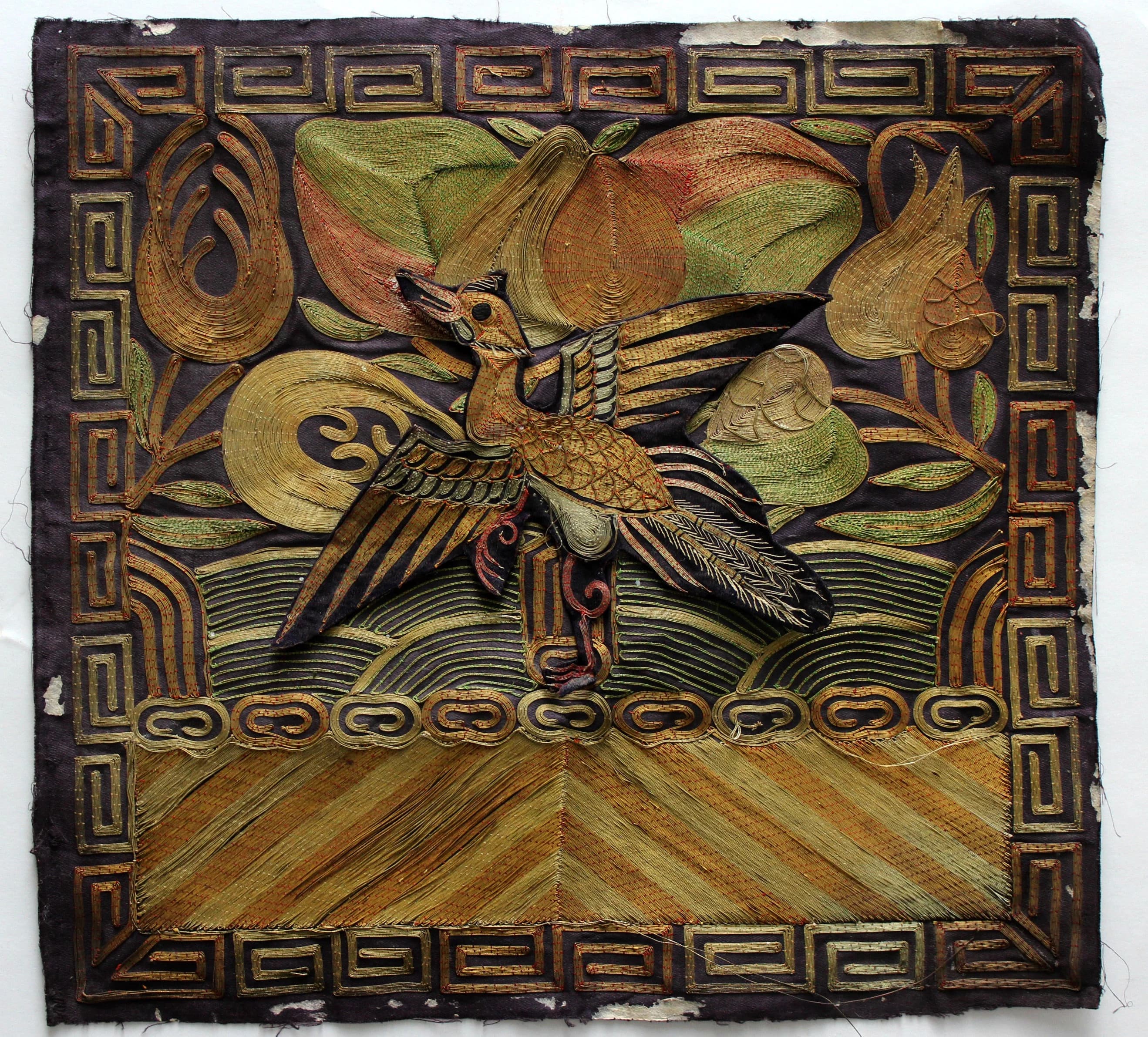
Antique Chinese Civil Badge Qing Dynasty
$1500.00
In stock
Description
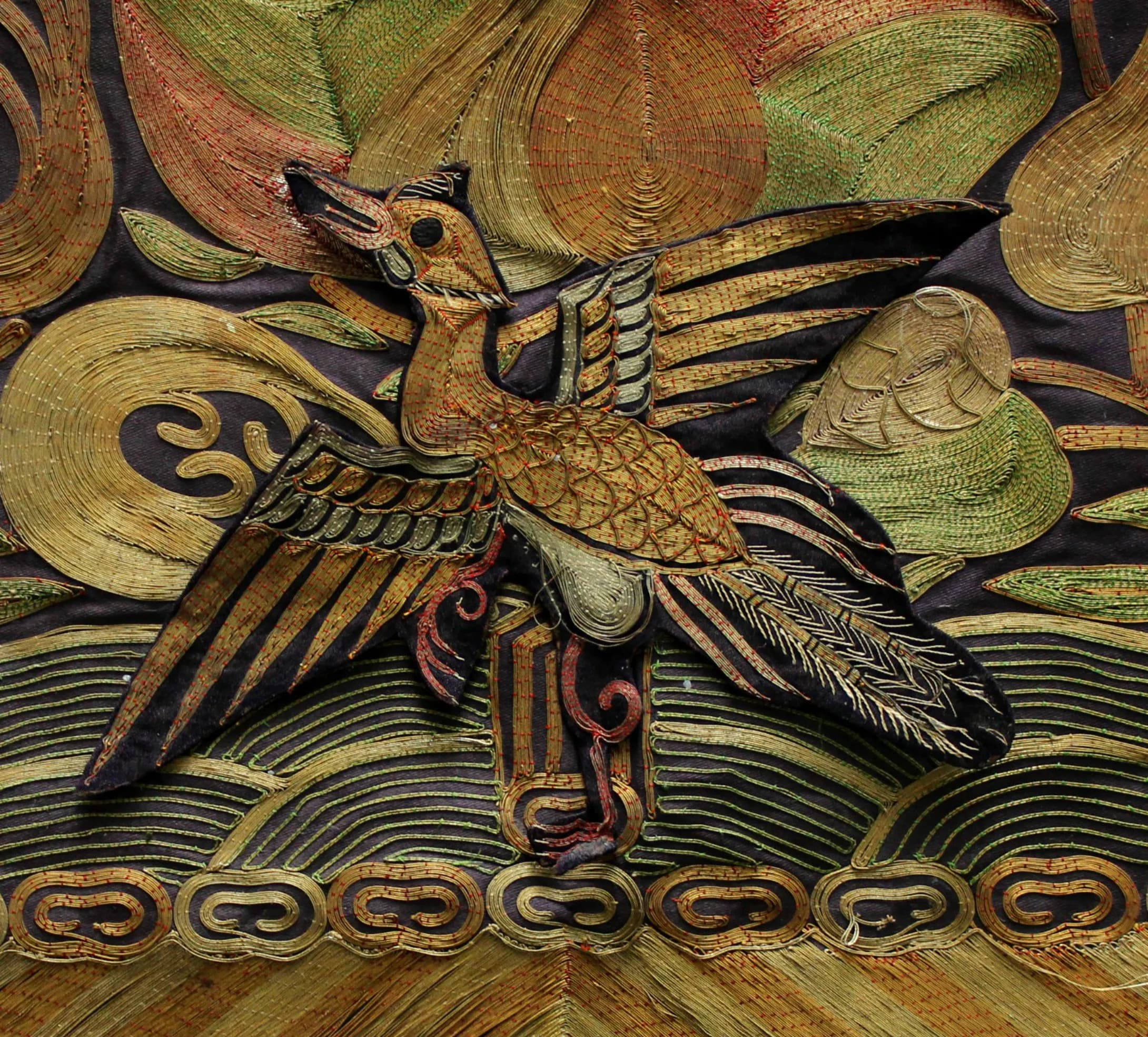
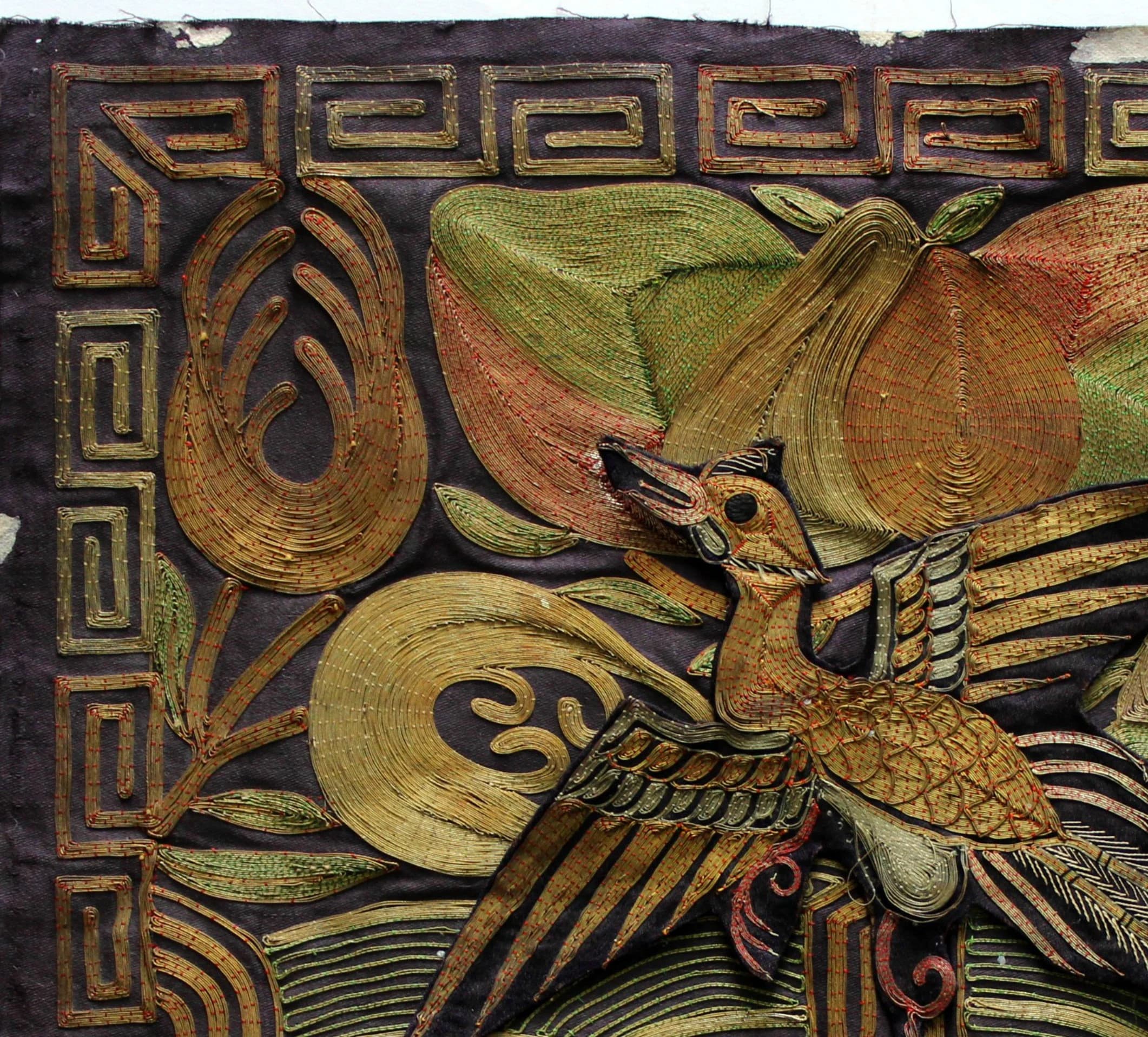
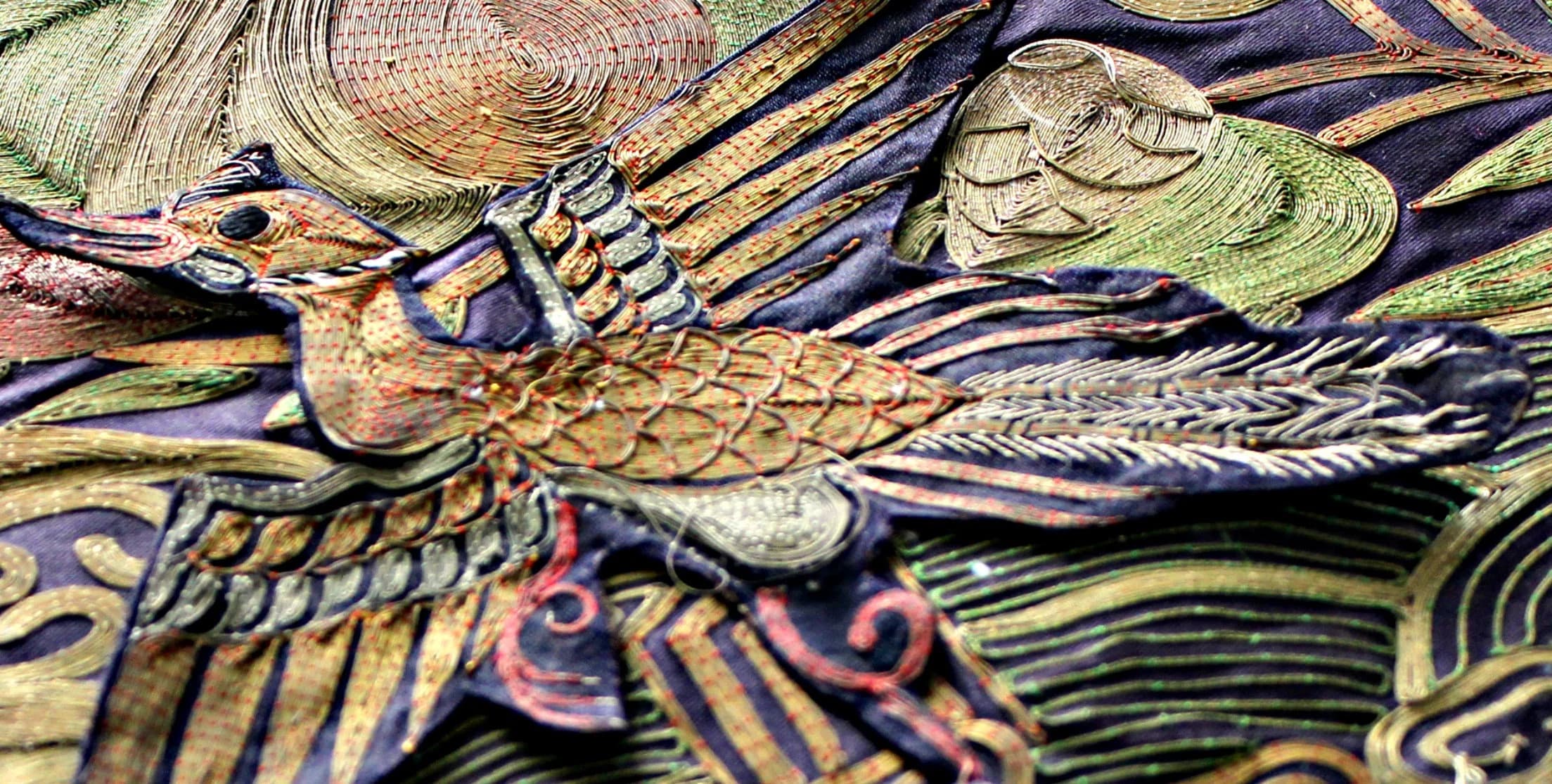
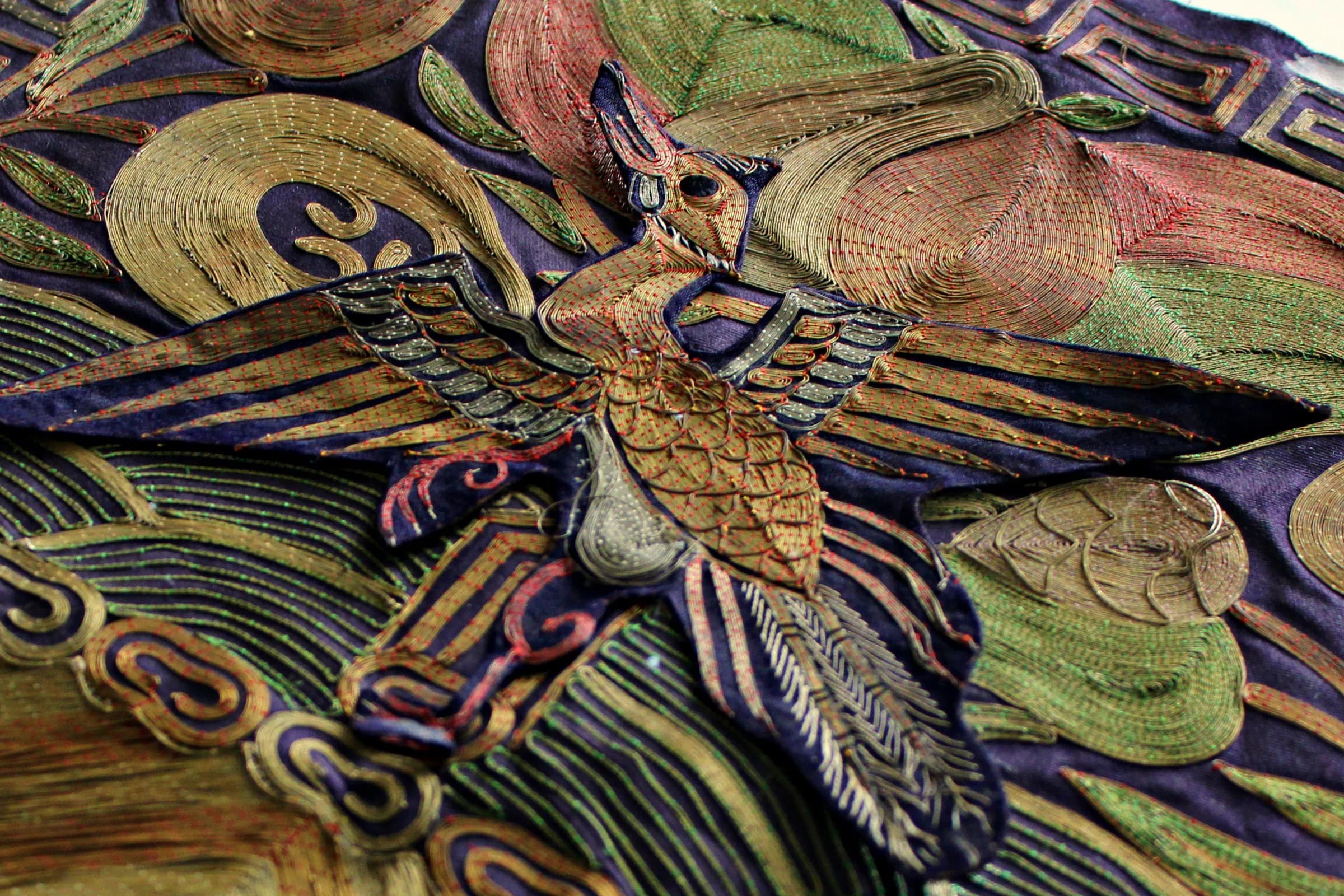
This exquisite embroidered badge, known as a buzi (or Mandarin square), is a square panel of dark purple silk, measuring approximately 11 - 11.5 inches on each side, designed to be sewn onto the chest and back of a formal surcoat (pufu) worn over a dragon robe in the Qing Dynasty (1644–1912). The badge depicts a majestic golden pheasant in flight, rendered with extraordinary craftsmanship using gold, silver, red, green, blue, and metallic threads in a technique called couched work, where threads are laid down and secured with tiny stitches to create a shimmering, almost three-dimensional effect. The pheasant's body is primarily gold with intricate feather patterns in green and red, its wings spread wide in dynamic motion, featuring layered plumes edged in blue and accented with fine red dots for depth. The head is crested, with a sharp beak, expressive eye, and subtle shading in blue and red, giving it a lifelike intensity. Surrounding the bird are auspicious motifs: large, stylized pomegranate-like fruits (symbolizing fertility and abundance) in red and orange, broad green leaves, and swirling clouds in gold, evoking a sense of harmony and prosperity. Below the pheasant, wavy green lines represent undulating waves or mountains, grounding the design in nature. The entire composition is framed by a classic meander (Greek key) border in gold and red, with subtle red accents, adding symmetry and imperial elegance. Signs of age—frayed edges, minor thread loss, and patina on the metallics—suggest this is an authentic 19th-century piece, likely from the mid- to late-Qing era, when such badges were at their most refined.
The golden pheasant specifically denoted the second civil rank (out of nine), just below the first-rank crane, symbolizing nobility, vigilance, and scholarly merit—qualities essential for high officials advising the emperor. By the 18th century, under emperors like Qianlong, designs standardized to a single bird amid floral and wave motifs, often with five tail feathers (up from three in early Qing), and produced in imperial workshops using silk from Nanjing or Suzhou, taking up to 30 months per robe set.
The practice ended with the 1911 Xinhai Revolution, which toppled the Qing and Emperor Puyi, leading many officials to destroy their badges to evade reprisals. Surviving examples, like this one, were often collected by Westerners (hence "Mandarin squares") and now symbolize China's imperial legacy of meritocracy and artistry.