Etsy
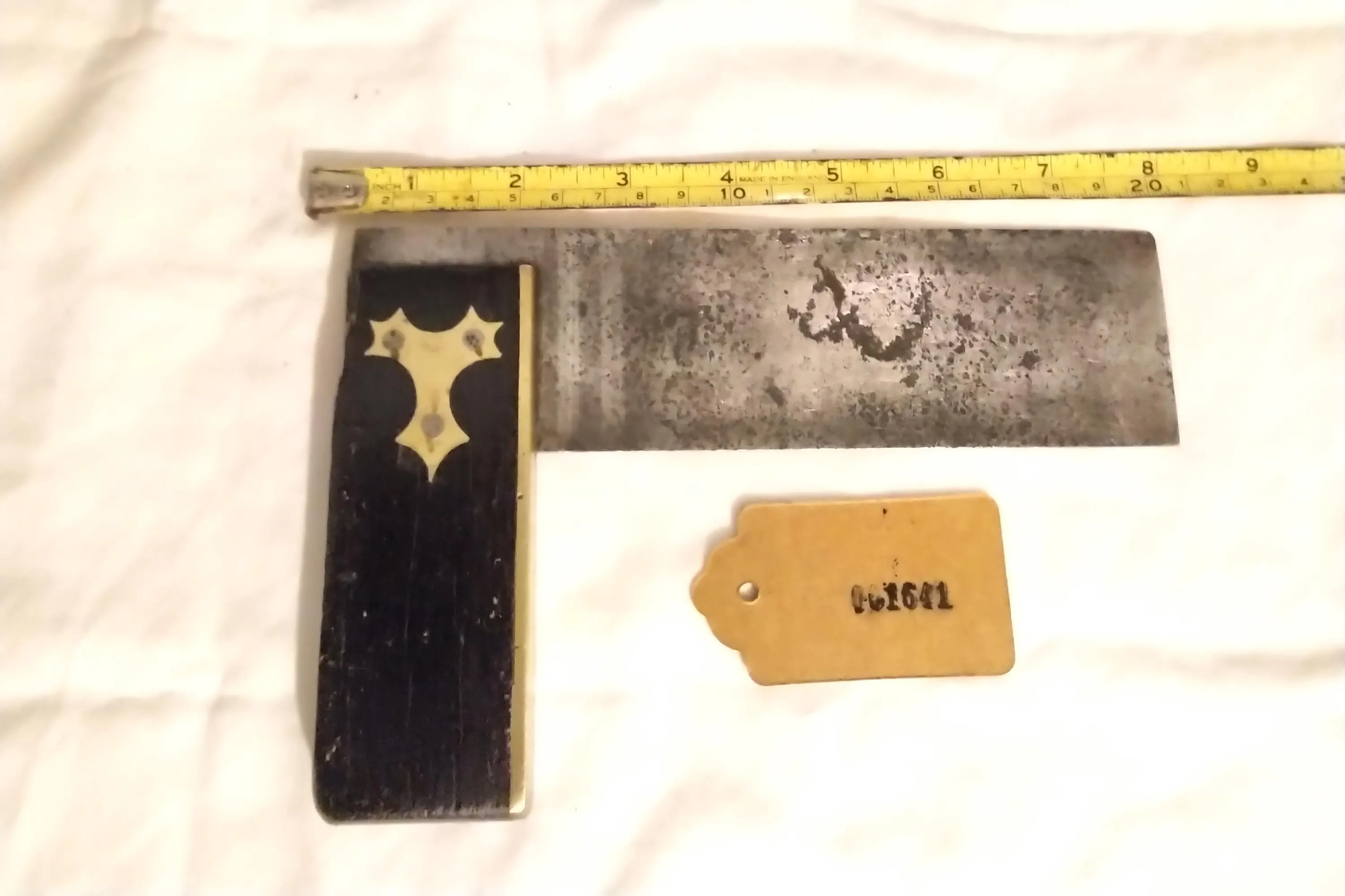
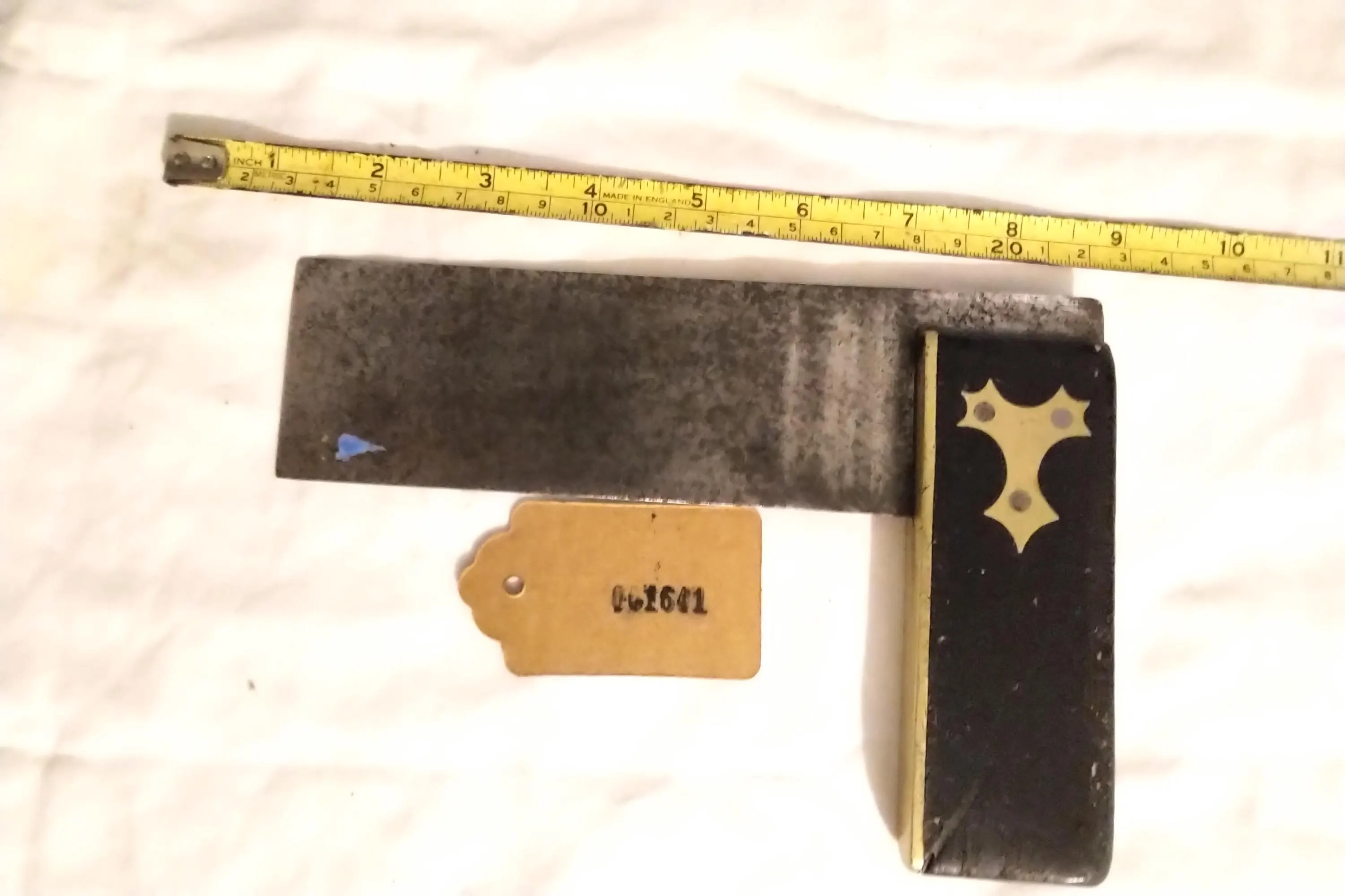
Early 20th Century Carpenter's try square in good condition, trued cleaned and ready for use. [001641]
GBP9.00
Out of stock
Description
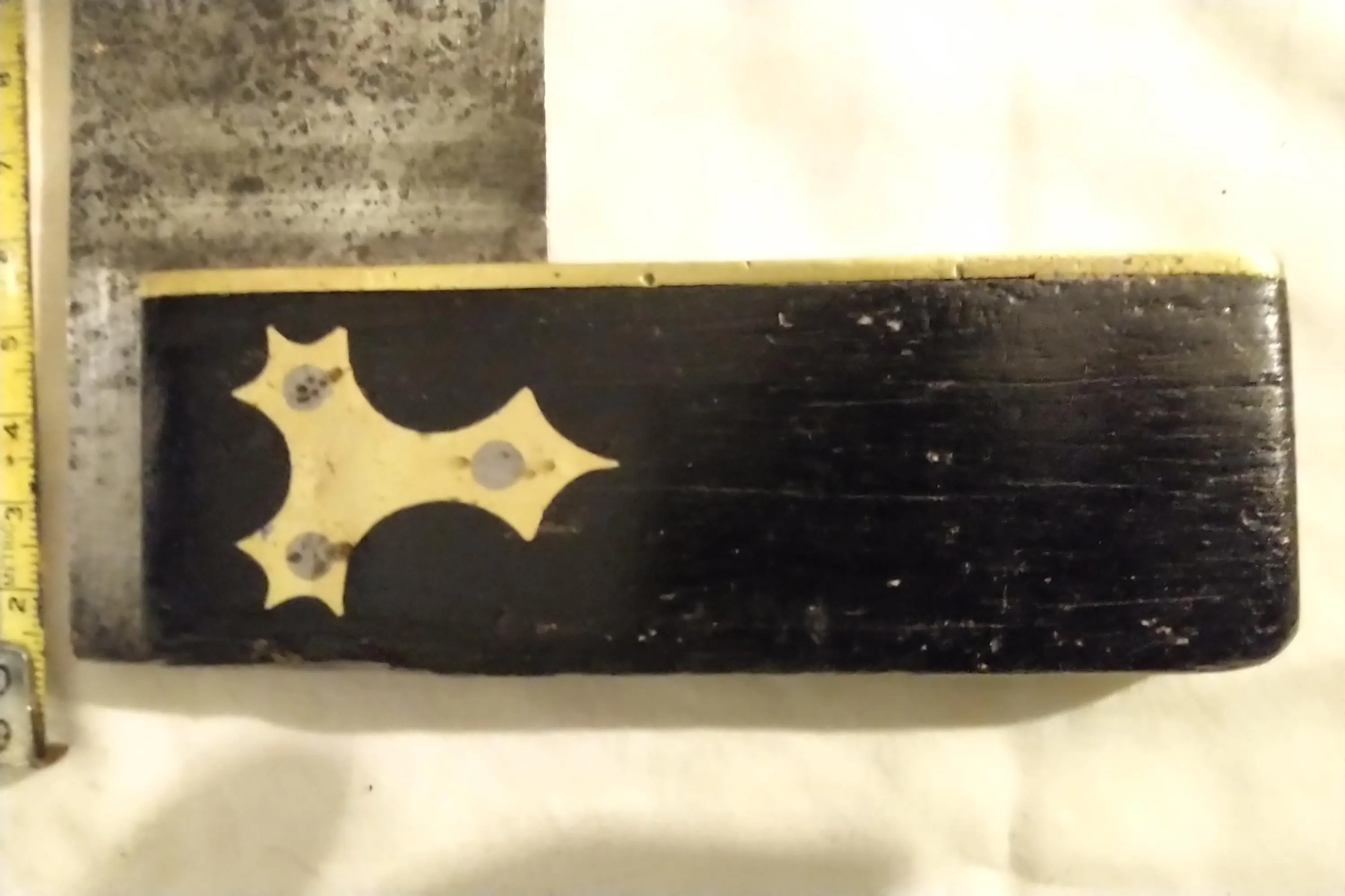
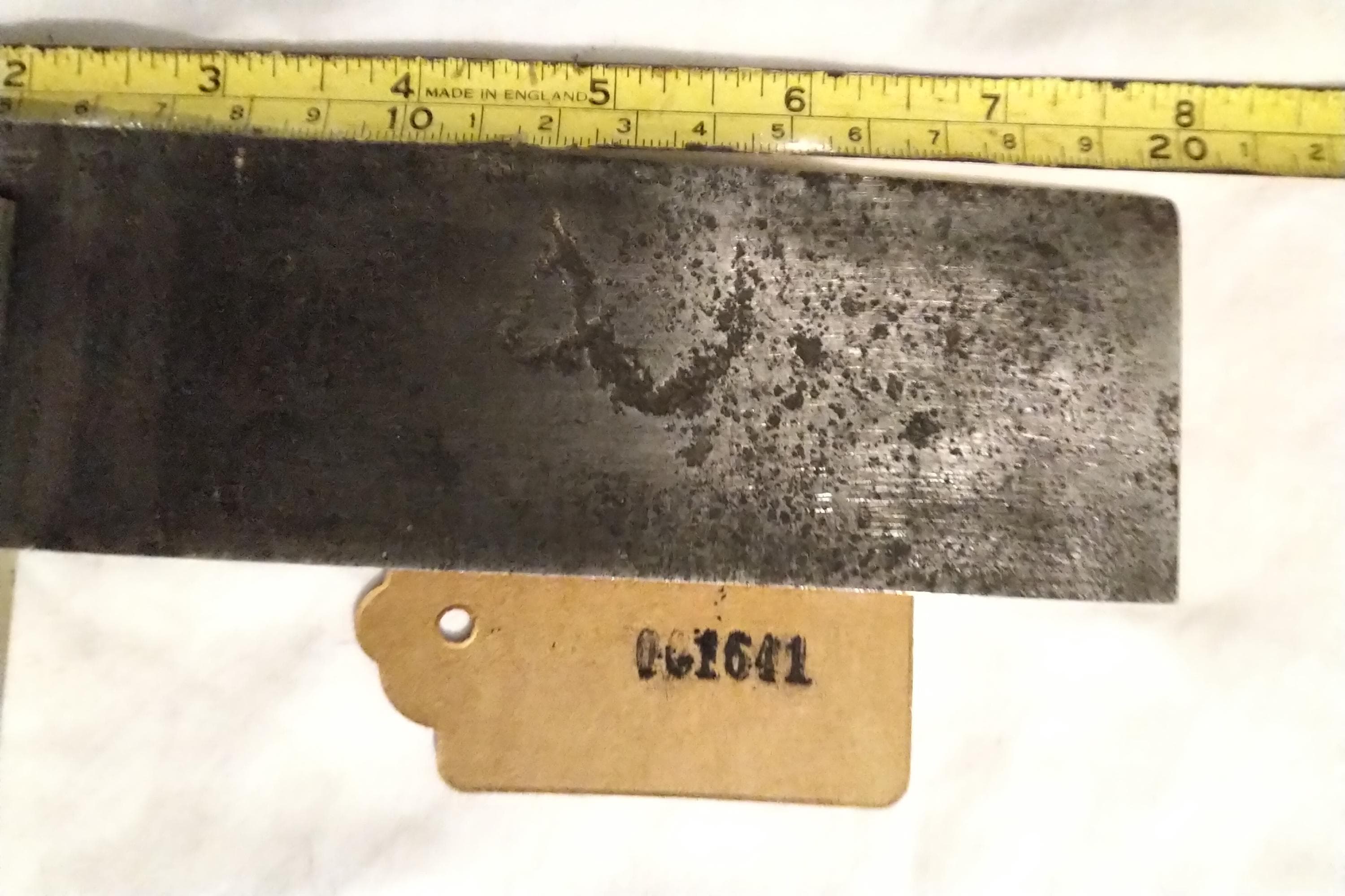
This is a Small carpenter's try square in good condition. Fully refurbished, cleaned trued and ready for use. The blade is 7 1/2" long with an inside length of 5 3/4". It has an ebony handle and the fittings are brass. It was made no later than the start of WWII and probably after about 1910. It is therefore around 100 years old.
This tool has been monstrously abused by (I think) storing it in a damp place. The blade is discoloured along its length with moderate pitting. I couldn't shine it without removing too much metal so I left it alone. Some people like the shabby look. The handle is patinated Ebony. It is densely black and there is no signs of lighter streaks. There are a few dents and a chip missing along the back edge. Nonetheless it is a superb block of wood and if you were minded to do it with a little care you would be able to get it pretty smooth.
The handle is tight and the fittings secure. The face plate is tight against the stock.
It was out of true when I received it but it did not tale long to get it back. I have removed all the active rust from the blade polished the brass work and re-lacquered the stock. It is ready to go.
Overall this is still a good useable tool of robust design which should give many years of useful service.
In the world of try squares, signs of quality are the thickness of the brass faceplate, how well it is secured to the stock, the quality of the fixing of the blade to the handle, the material from which the handle was constructed and the quality of the steel. By that standard this was, when new, nearly the best money could buy. Someone paid a lot of money for it at the time and they would have taken very good care of it. It was then, and it remains today, a craftsman's tool.
Most old try squares are no longer square when I get them and it is therefore unusual to find one that is still spot on. Like most tools from this period they are very well made because at the time toolmakers were not only concerned with function but also what their tools looked like. You cannot buy new Rosewood handled tools now because of CITES but it was never cheap and the best wood was very expensive. Ebony was only used for the best of the best. Most good squares now have handles of walnut or beech.
Old squares are a pleasure to hold and all have a decent weight. If you don't drop them, or abuse them and you keep them hung up and don't just throw them in your tool box they will serve you for many years. If you do drop them check to make sure they are true before using them again.
The Try Square is the most abused tool in the carpenters tool box. It is a precision tool and yet it is dropped, used as a convenient hammer and a lever and generally misused. The carpenter will drop it on his desk or throw it into his tool box and I even had one in my workshop someone used as a filling knife. Small wonder then that they stop being square. You have to look after them. If you drop your square check it before you use it again and if it isn't square you need to re set it. It only takes a few minutes. An all metal square may be (in theory at least) more accurate but it will not give you a warm feeling when you run your hands over it and no-one would ever call them pretty
Squares like this were once beautiful and accurate tools and in most cases they can be restored with patience and a file. Throwing them away makes no sense at all; reusing old tools is environmentally friendly and you are continuing the traditions of craftmanship of previous generations.