Etsy
Family Video Tape Archive Index Book Printable | VHS and Camcorder Tape Inventory of What the Label Says and What Is On It (17 Pages)
$5.80
In stock
Description
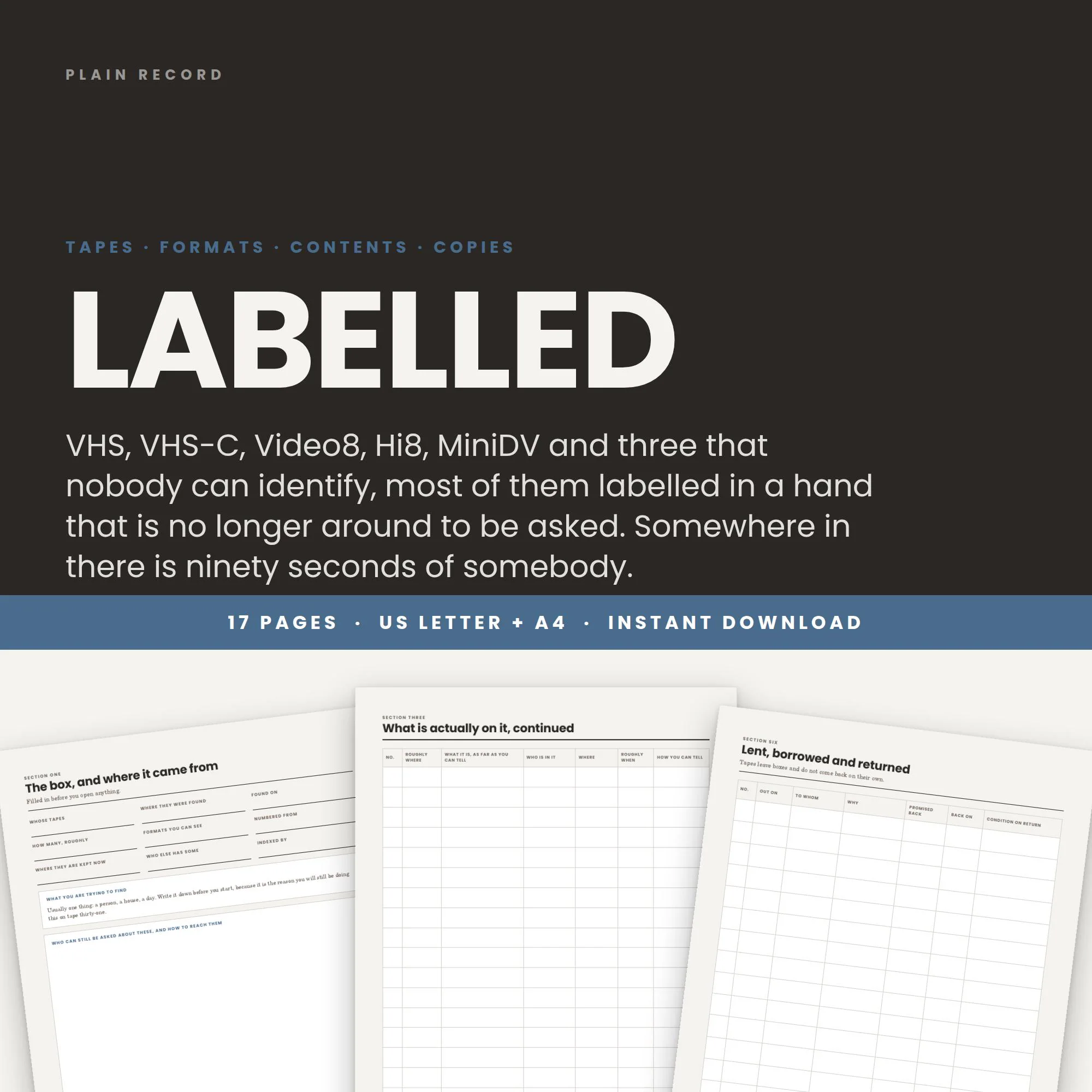
Forty tapes in a box, and eleven of them say Christmas.
VHS, VHS-C, Video8, Hi8, MiniDV and three that nobody can identify, most of them labelled in a hand that is no longer around to be asked. Somewhere in there is ninety seconds of somebody who died in 1998. Nobody will ever find it by putting tapes in a machine at random.
LABELLED is 17 pages of plain, ruled paper for exactly that. Every tape in the box, what the spine says, what is actually on it, roughly where in the tape it is, who is in it, and where any copy went — so that somebody can find something.
THE FOUR PAGES THAT PAY FOR IT
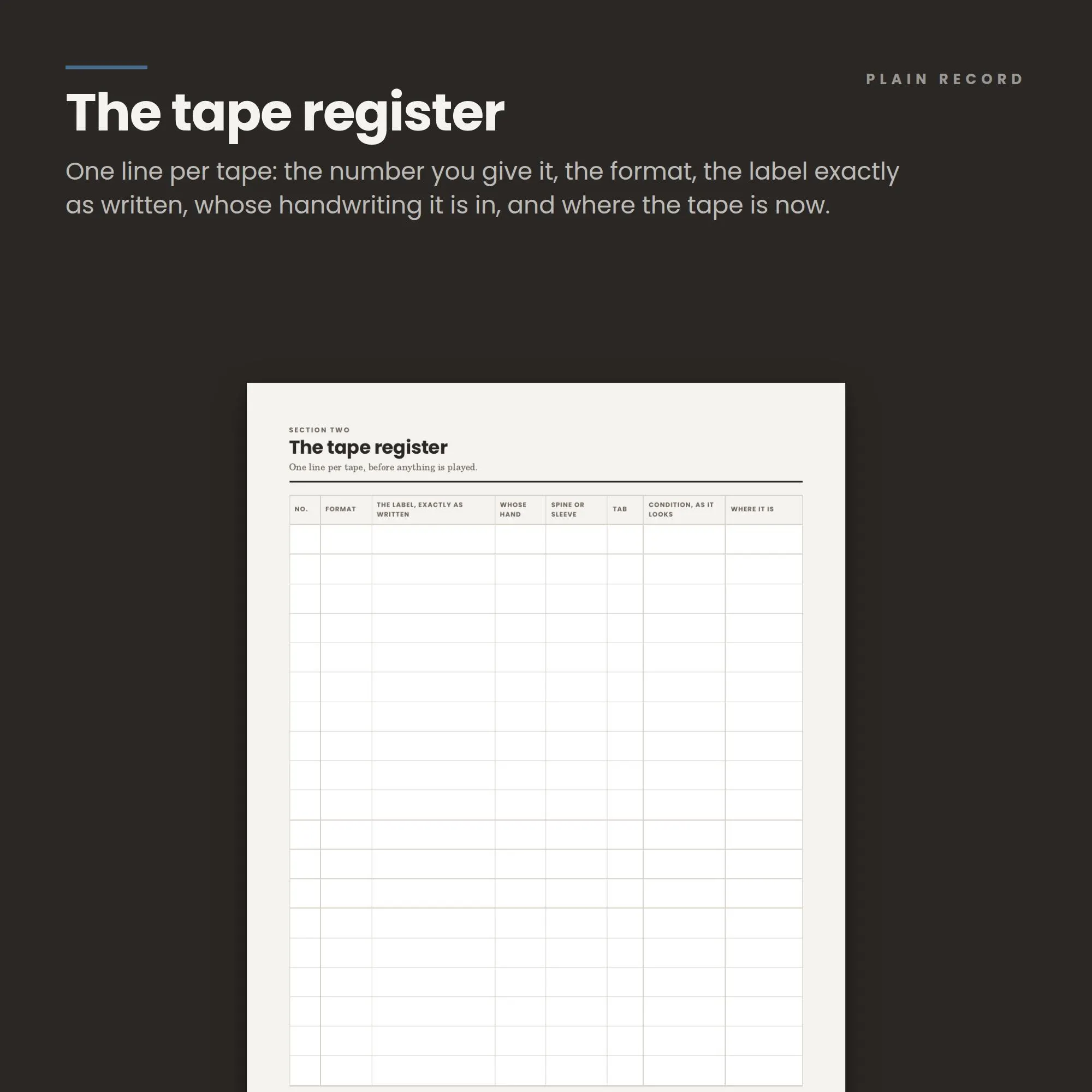
The tape register. One line per tape: the number you give it, the format, the label exactly as written, whose handwriting it is in, and where the tape is now.
What is actually on it. Roughly where in the tape — counter, minutes, or side two after the wedding — what you can tell it is, who is in it and roughly when. As far as anyone can tell, and no further.
The label against the contents. The page that earns the book. What the spine says, what is really on it, whether they agree, and what you concluded. Half a box is usually mislabelled.
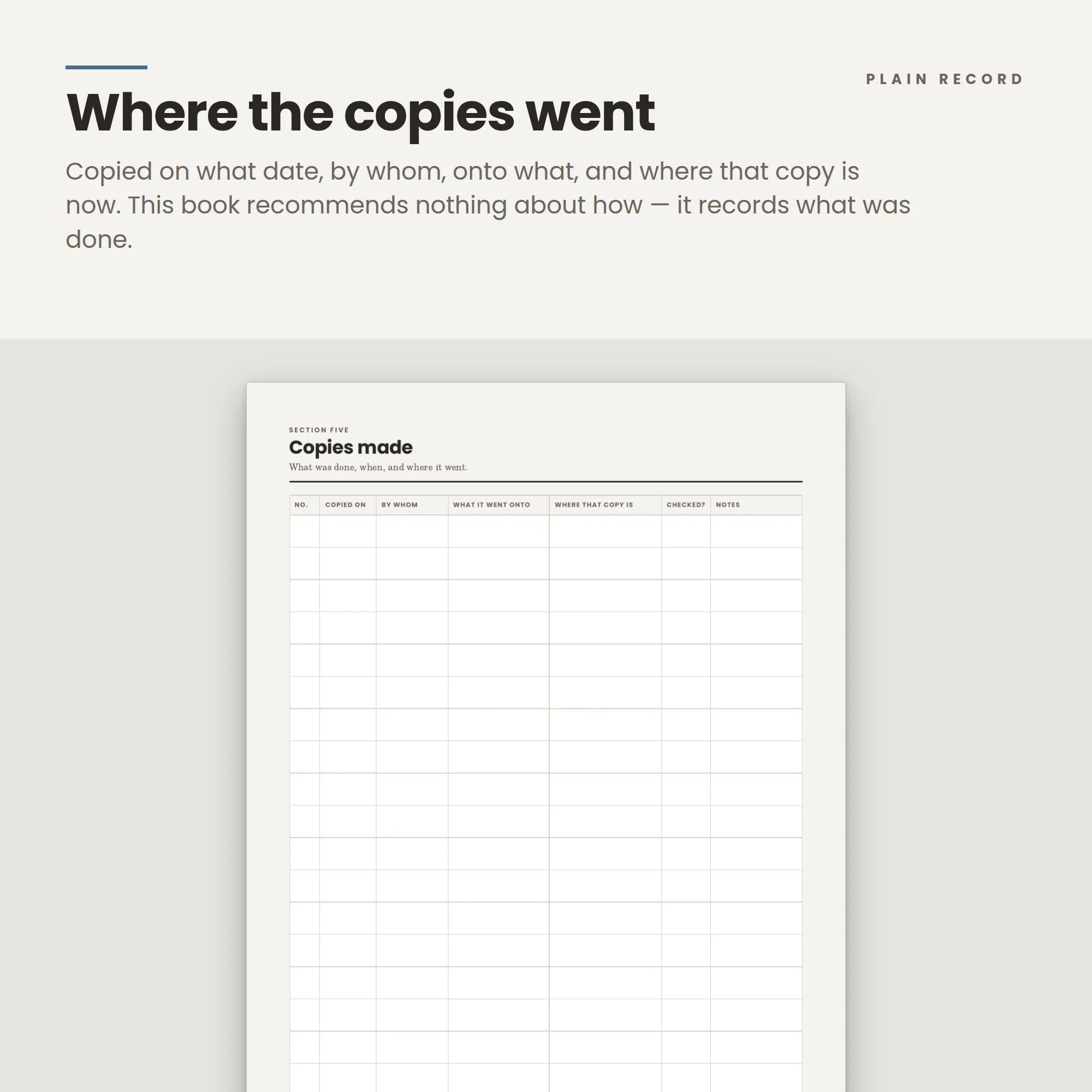
Where the copies went. Copied on what date, by whom, onto what, and where that copy is now. This book recommends nothing about how — it records what was done.
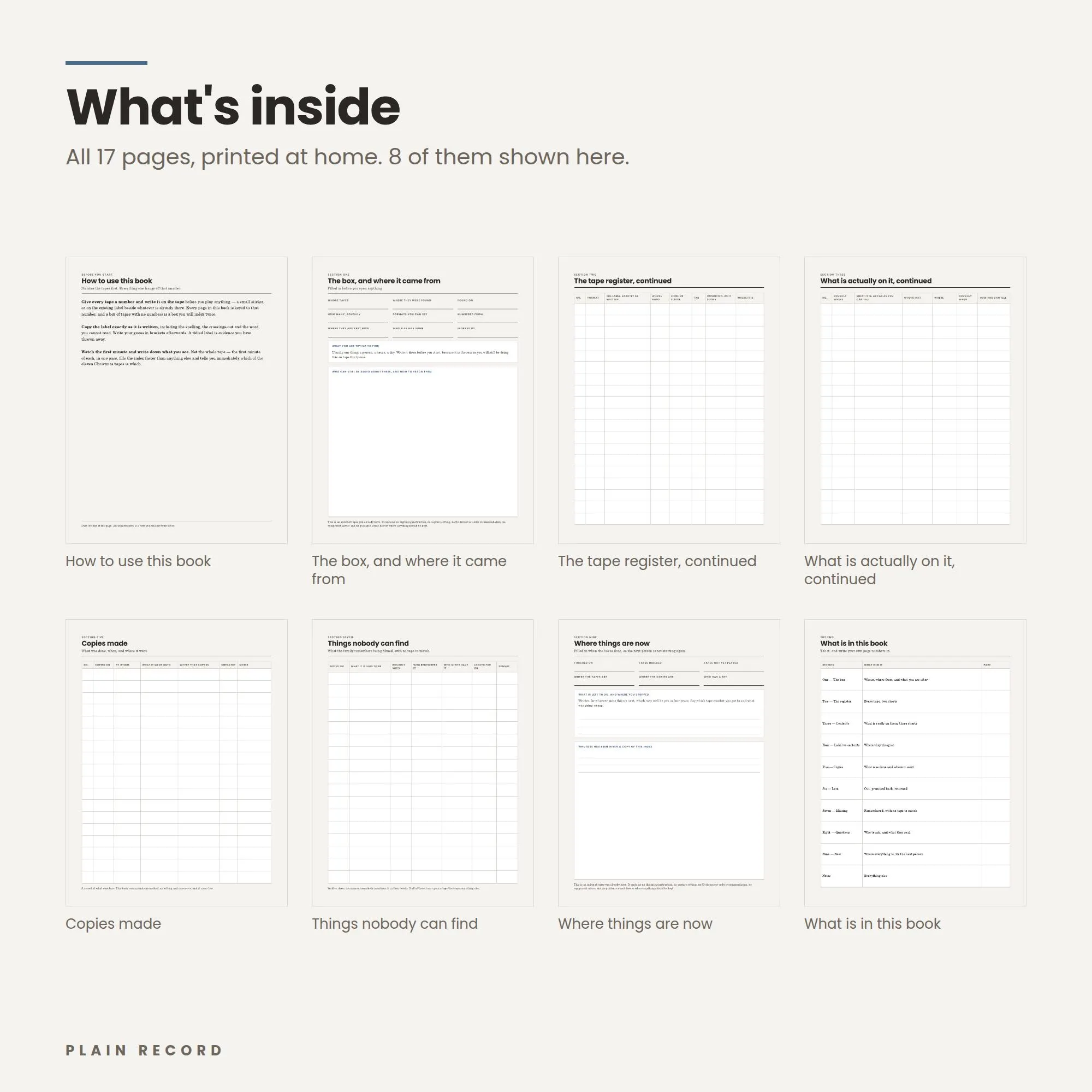
WHAT IS INSIDE
One — The box Whose, where from, and what you are after
Two — The register Every tape, two sheets
Three — Contents What is really on them, three sheets
Four — Label vs contents Where they disagree
Five — Copies What was done and where it went
Six — Lent Out, promised back, returned
Seven — Missing Remembered, with no tape to match
Eight — Questions Who to ask, and what they said
Nine — Now Where everything is, for the next person
Notes Everything else
WHY IT IS A BOOK AND NOT A SPREADSHEET
Because it is written sitting on the floor beside an open box with a tape in one hand, and then again beside a television with the remote in the other. Both of those are two-handed jobs in awkward places. A book stays open at the right page, takes a counter reading in three seconds, and can be passed to whoever is doing the next shelf.
WHAT YOU GET
Four PDFs, one for each print size:
US Letter (8.5 x 11 in)
A4
Half-Letter (5.5 x 8.5 in)
A5
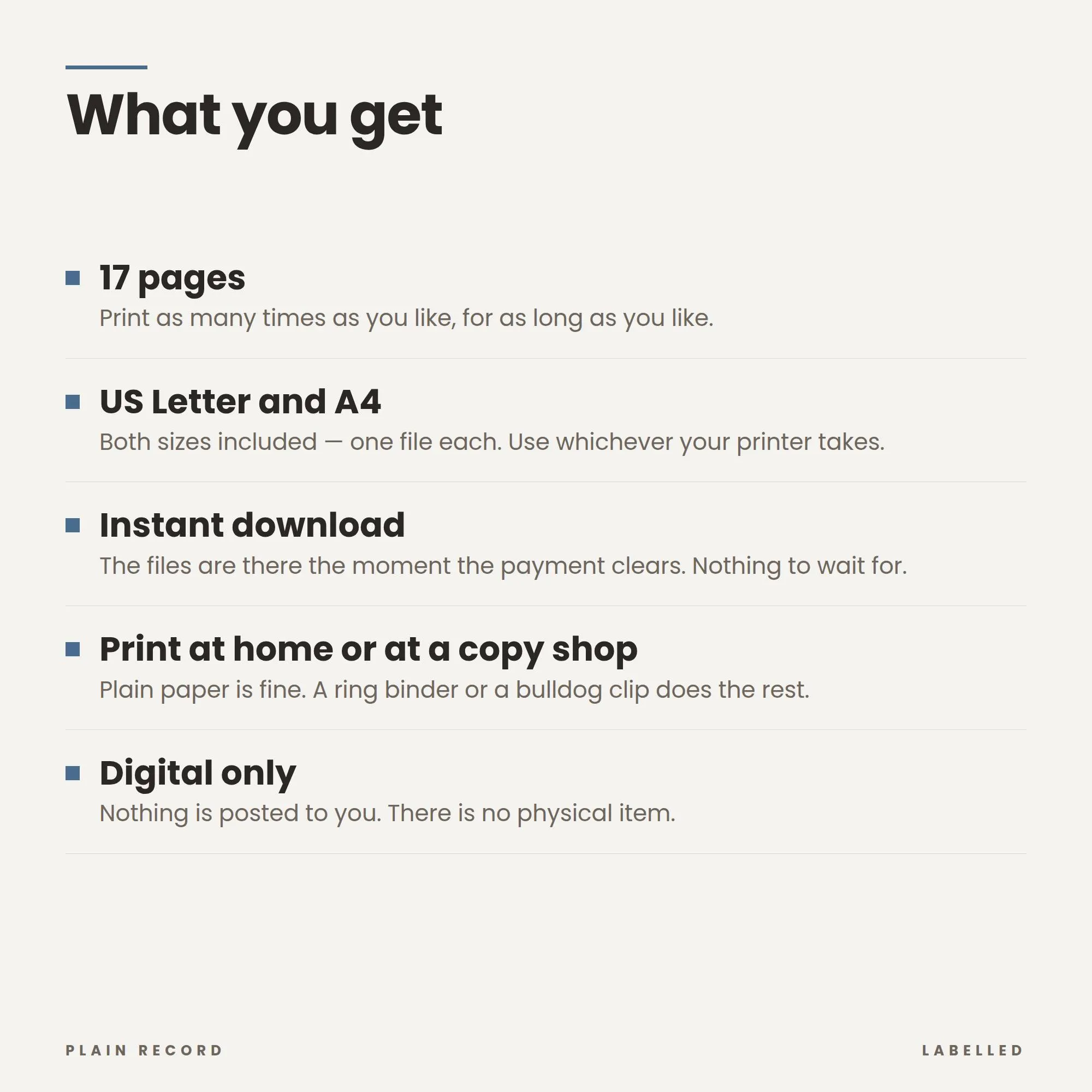
17 pages each. Print at home or at a print shop, as many times as you like, for as long as you like. Plain paper and a ring binder is the whole kit. Instant download, in your Etsy Purchases the moment payment clears.
THE SMALL PRINT
Digital download. No physical item is shipped. Colours vary between screens and printers. For personal use. Please do not resell or redistribute the files.
A NOTE ON WHAT THIS IS
The shortest page in the book, and worth reading first.
This is an index of tapes you already have. It contains no digitising instruction, no capture setting, no file format or codec recommendation, no equipment advice and no guidance about how or where anything should be kept.
What this is. Ruled paper for writing down what you have, what you did and when — with a date beside it. Nothing in it is computed and nothing in it is advice
What this is not. Not a digitising guide. It names no capture device, no software, no file format, no codec, no resolution and no bit rate, recommends no deck, no cable and no service, and it gives no advice at all about temperature, humidity, rewinding or how tapes ought to be stored
Why it refuses. Because that advice depends on the format in front of you, the machine you can actually get hold of and what the copy is for — and because it dates fast. A recommendation printed today is read as authority in five years when it is wrong, and a wrong setting is a tape you only get one pass at. What this book is good at is knowing which tape is which, what is really on it, and where the copy went. What to copy it with is a question for somebody who has the tape and the deck in front of them