Etsy
Small Japanese Sake Set – Kutani-yaki, Shōwa Period
EUR39.00
In stock
Description
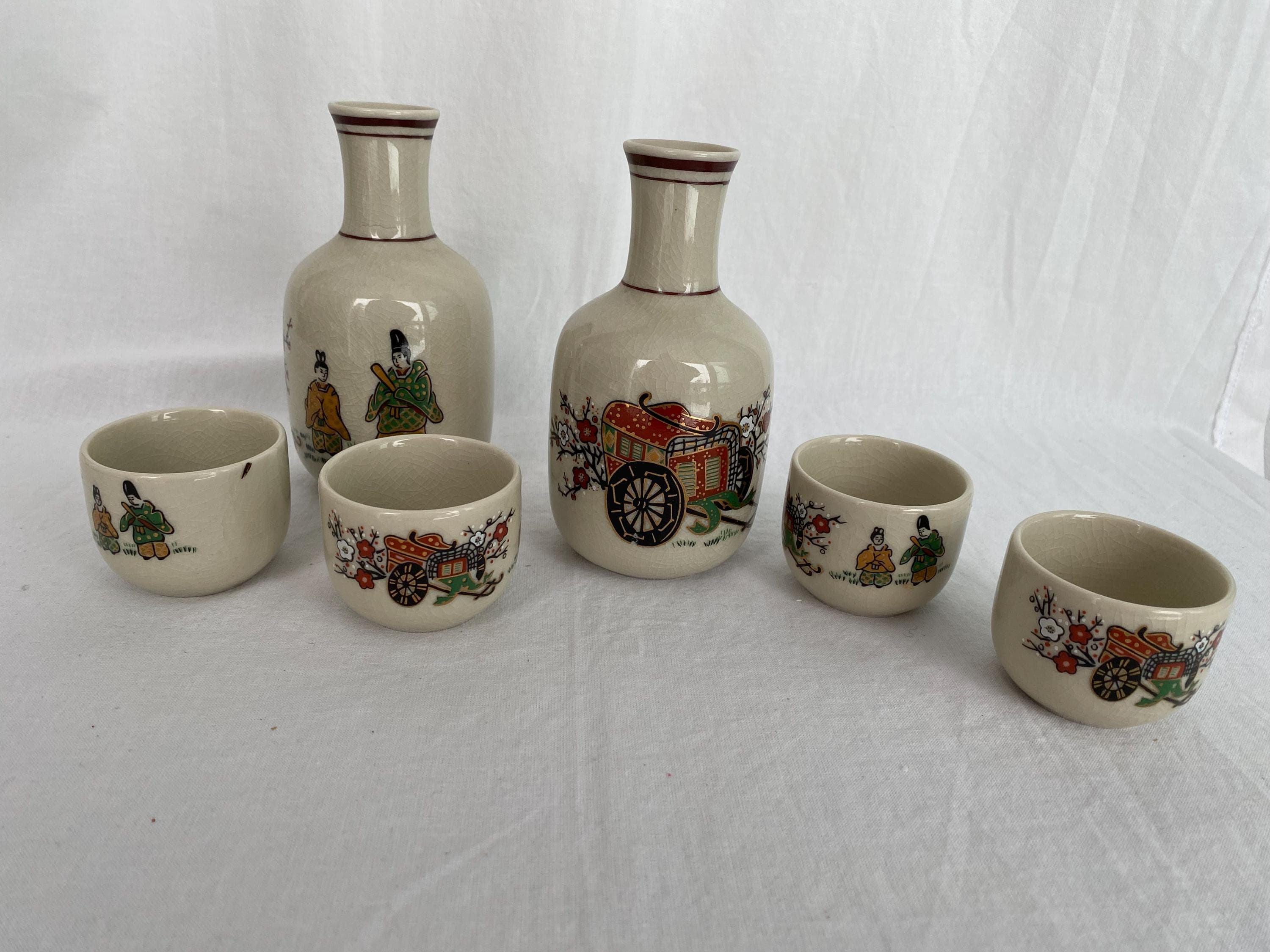
A charming and well-preserved Japanese sake set consisting of two bottles (tokkuri) and four cups (ochoko).
The set represents traditional Kutani-yaki ceramics from the Ishikawa region of Japan.
Period: Shōwa era (likely mid-20th century)
Origin: Japan, Kutani (Ishikawa Prefecture)
Material: Glazed crackle ceramic
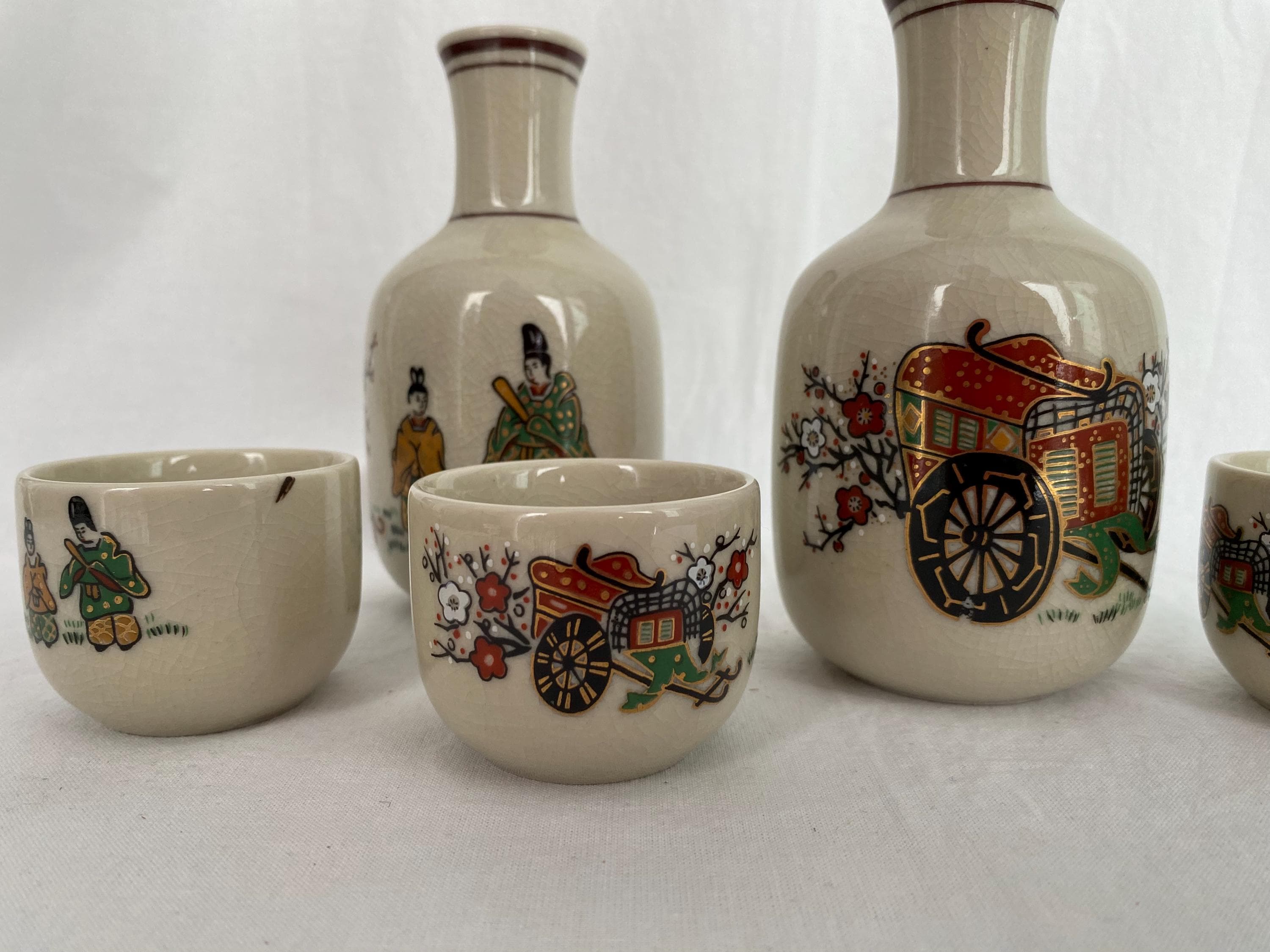
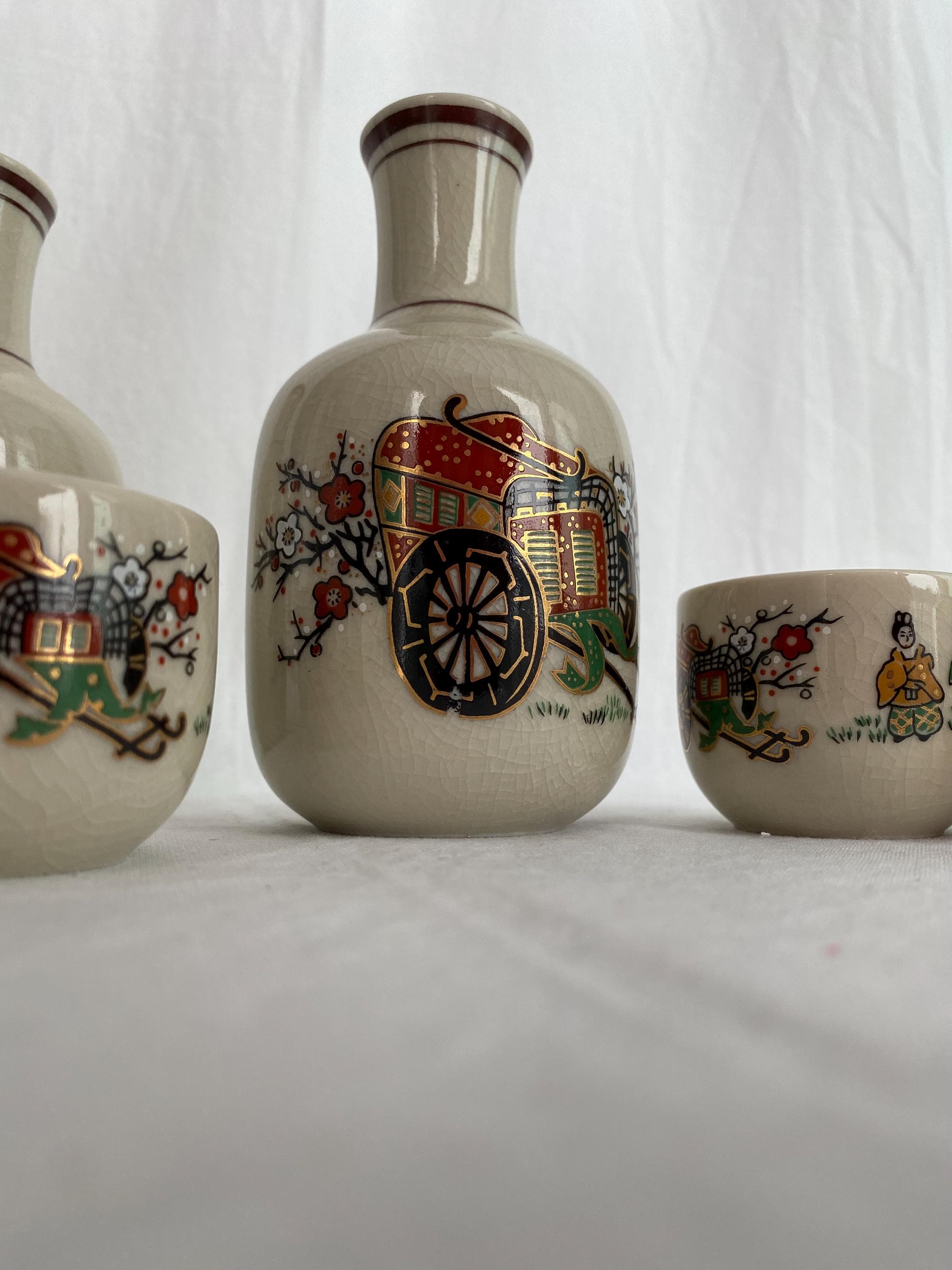
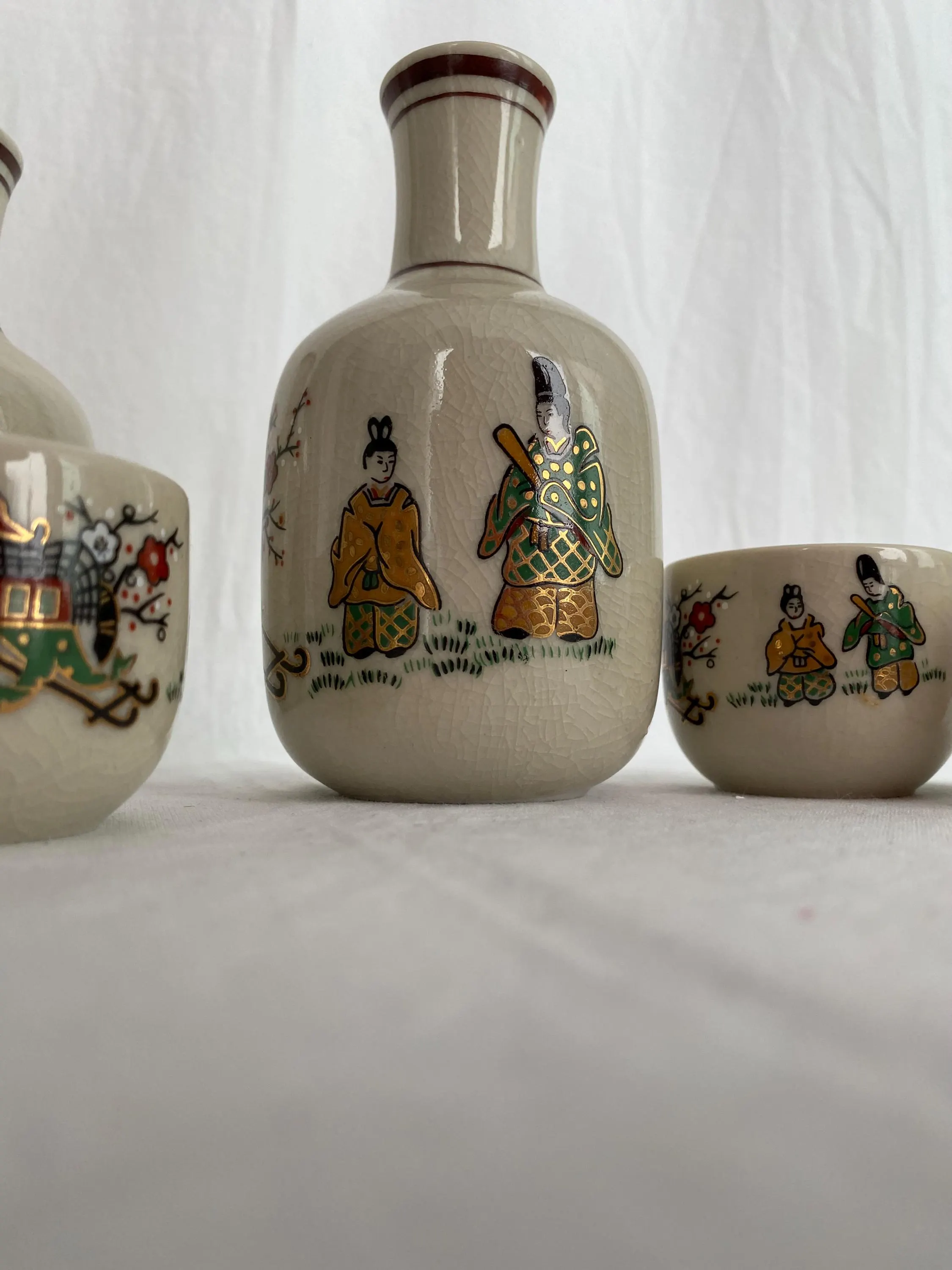
Decoration: Gosho-guruma (imperial carriage), blossoming plum tree, and Heian-period court nobles
Measurements:
– Bottle height approx. 14 cm (5.5 in), base diameter approx. 7 cm (2.75 in)
– Cup height approx. 4.2 cm (1.65 in), diameter approx. 5.2 cm (2.05 in)
Capacity:
– Each bottle approx. 275 ml (about 1.5 go)
Weight:
– One bottle approx. 205 g
Condition:
Very good vintage condition. The glaze shows even, natural crackling (kan’nyū 貫入), typical of age and traditional firing techniques.
No chips, cracks, or repairs.
⸻
The decoration is characteristic of Kutani ware, known for its vivid colors, clear outlines, and narrative imagery.
The design features a gosho-guruma, a Japanese imperial carriage, surrounded by blossoming plum branches and court nobles dressed in traditional Heian-period (794–1185) attire. The Heian era is regarded as a golden age of Japanese court culture, poetry, and visual arts, and its refined aesthetic is clearly reflected in this set.
The naturally formed crackle glaze (kan’nyū) adds depth and warmth to the surface. It is not a flaw but a valued aesthetic feature in Japanese ceramics, revealing the passage of time and careful use.
The base of the pieces bears the red Kutani 九谷 mark, confirming their origin and connection to the long ceramic tradition of the Ishikawa region.
⸻
Provenance and personal history:
When I first saw this set at my aunt’s home, it was displayed on the edge of a bookshelf, placed on a small linen cloth. One of the cups sometimes held her medicine, and one of the bottles was used for water.
My aunt told me she had received this sake set from a colleague while living abroad. The colleague had noticed her interest in Japanese objects and brought it to her as a gift. Based on this, I estimate that she received the set around 1970, no later than 1978.
The set has been carefully kept ever since, and its condition reflects appreciation rather than frequent use.
⸻
Our opinion:
A decorative and historically meaningful sake set. Beautiful both for actual use and as a refined display piece on a shelf or in a cabinet.